Os últimos 150 anos foram marcados por transformações incríveis para o planeta e para a humanidade, mudando a forma como produzimos nossos bens de consumo, como nos locomovemos, como socializamos.
Sentimos os benefícios dessas transformações em nosso dia-a-dia, mas sentimos também os seus efeitos negativos que estão cada dia mais evidentes.
O planeta está passando por mudanças climáticas acentuadas devido principalmente à queima de combustíveis fósseis que abastecem nossas indústrias, nossos lares e nossos meios de transporte e que são a base do nosso atual estilo de vida.
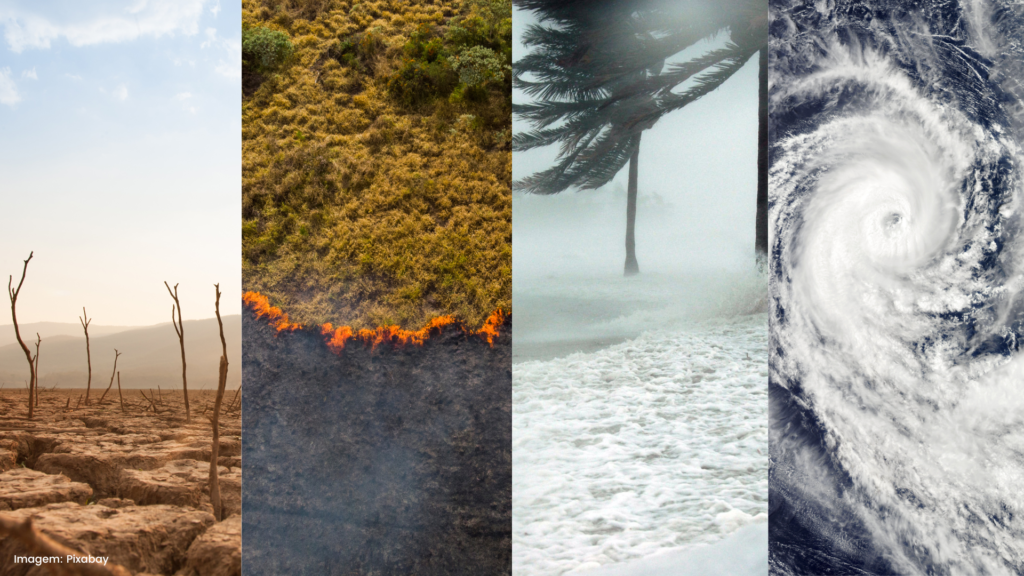
A temperatura média na superfície da Terra aumentou cerca de 1,1ºC desde então, ocasionando os chamados eventos climáticos extremos: degelo dos polos, aumento do nível do mar, chuvas e secas intensas.
Mais de 70% da superfície da Terra é composta por mares e oceanos, portanto, são eles que absorvem a maior parte do calor resultante do aquecimento global.
O aumento da temperatura dos oceanos está acelerando o derretimento das calotas polares, gerando um efeito cascata de eventos.
A água resultante do degelo das calotas polares eleva o nível do mar, que por sua vez aumenta a erosão das áreas costeiras dos continentes e as inundações nessas áreas, além de ocasionar o desaparecimento por submersão de pequenas ilhas. Com isso, haverá uma migração natural para o interior dos continentes. Pequenos países costeiros ou insulares sofrerão mais, pois serão atingidos mais cedo e terão suas áreas territoriais diminuídas, impactando diretamente sua economia.
Maiores taxas de evaporação e precipitação, decorrentes do aumento da temperatura, fazem com que algumas regiões se tornem mais úmidas e outras mais secas, impactando diretamente o agronegócio.
Alguns países já estão sofrendo hoje com eventos climáticos extremos.